Companies in Germany Rely on the Cloud
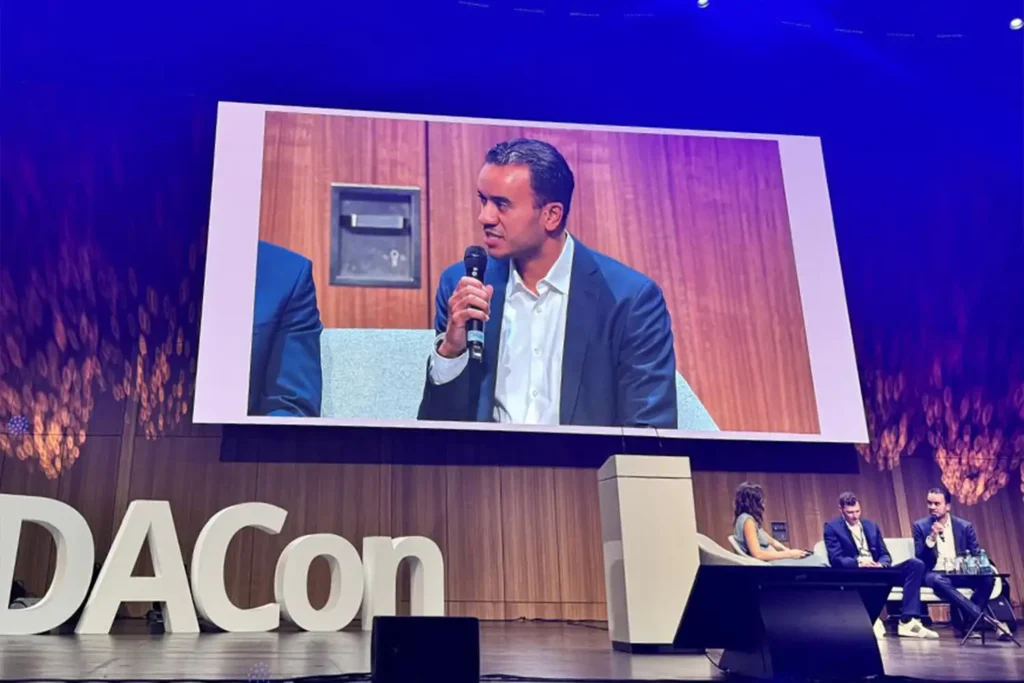
Frankfurt/Main, July 11, 2023 – “There have never been more cloud applications in German companies than today,” reports Jerome Evans, founder and managing director of firstcolo GmbH, based in Frankfurt. Numbers support his statement: According to the Cloud Monitor 2021 by bitkom research and KPMG, 82 percent of the 556 companies surveyed use cloud computing. Another 15 percent are planning to do so in the near future. However, it will not remain the only option on the data processing market for much longer.
For the past few years, additional computing systems have been emerging, such as edge. Experts primarily attribute this boom to the recent increase in Internet of Things (IoT) devices. The IoT refers to a network of devices equipped with sensors that are interconnected and exchange data via the internet. But what does edge computing mean, where are the differences from cloud data processing, and will it replace it in the future?
Edge Computing Means Local Instead of Central
While the cloud is increasingly becoming the standard in information technology, edge computing is an area on which many companies have recently focused their investment interest. It involves decentralized data processing at the edge of a network, with a possible or limited connection to a large data center.
“Edge computing consists of a network of many micro data centers that process locally generated data directly at the point of origin,” explains Evans. This usually occurs directly in the end device. A distinction is made between thick-edge and thin-edge devices. The latter offer little storage capacity or low computing power and can therefore only handle tasks with low IT resources. In contrast, thick-edge devices have extensive IT capacity and also take on cloud tasks with this capacity.
Advantages and Disadvantages of Cloud and Edge Computing
The low latency speaks in favor of processing data at the edge. “This is a critical factor for many IoT devices such as self-driving cars that require real-time data transmission,” explains Evans. It offers an efficient and cost-effective solution for processing large amounts of data locally without forwarding sensitive company data. At the same time, however, there are some significant disadvantages compared to cloud computing. For instance, setup typically involves higher costs or greater effort.
In addition, the reliability of the connection can fluctuate significantly if a single device fails. Ensuring security at the edge of the network remains particularly challenging. “Cloud computing systems offer a protective central structure in which operators process data securely in a data center, protected from cyberattacks,” explains Evans. With edge devices, ensuring security becomes more difficult due to the spatial distribution and number of devices. Here, specially trained personnel must protect the devices through regular maintenance, updates, and restricted access. These tasks are often handled by external colocation service providers.
Weighing the Decision for Edge or Cloud
Many companies today have control over a constantly growing data stream that they must process and simultaneously store securely. In this context, they must choose the appropriate strategy from the various options available, at the latest in the near future. “In this regard, the edge alternative naturally does not displace cloud computing from the data processing market. Both offer different solution approaches for various challenges of modern society,” says Evans.
Edge computing is particularly interesting for companies that require real-time processing of their data: It thus provides an important tool for IoT devices. “For all other businesses, the cloud usually remains the most reliable partner, as it scores with its security, global scalability, and lower costs,” the expert concludes.